
1471 stories
·
0 followers

Weeks into explosive diarrhea outbreak, sluggish CDC plans response team

1 Share

The Trump administration continues to respond sluggishly to the explosive, nationwide outbreak of Cyclospora—a unicellular parasite spread from human feces that has now sickened nearly 23,000 people in 47 states, killing two and sending over 500 to the hospital.

Michigan health officials reported the two deaths Monday, and The Washington Post first reported Tuesday that federal health officials have expanded a list of states with linked cases from nine to 15. But those updates still have not appeared on public outbreak pages for the Centers for Disease Control and Prevention or the Food and Drug Administration, and Americans are struggling to understand the risk of eating fresh fruits and vegetables.

In comments to Ars Technica on Monday, a spokesperson for the Department of Health and Human Services, which oversees CDC and FDA, said the outbreak information will be updated sometime "this week." Sources for The New York Times said that the CDC plans to set up a "formal response team" for the outbreak sometime this week. Cases in the outbreak began in June.

Michigan has been one of the hardest hit states in the outbreak. As of August 5, it is reporting 12,218 cases since June 22. On Monday, the state's health department reported the outbreak's first and only deaths, which are rare for the parasite. Cyclosporiasis infections are unquestionably miserable—causing explosive watery diarrhea, abdominal pain, nausea, bloating, and gas—but they're rarely fatal. According to medical records, the two deaths occurred in people with "significant underlying health conditions that may have been impacted by cyclosporiasis and dehydration," the state's health department said.

Michigan's cases are linked to those in eight other states. FDA's traceback investigations linked the cases in those nine states to Taylor Farms' shredded iceberg lettuce grown in Mexico and distributed to Taco Bell restaurants, as well as other restaurants, retailers, and food distributors. The nine states in addition to Michigan are: Illinois, Indiana, Kansas, Kentucky, Michigan, Ohio, Oklahoma, Pennsylvania, and West Virginia.

The Post reported Tuesday that the CDC is now adding six more states to the list of linked cases: Arkansas, Iowa, Missouri, Nebraska, New Hampshire, and North Carolina.

The Times independently confirmed the additions later Tuesday. Still, the new states have yet to be added to the FDA's and CDC's sites for the outbreak cluster, which still list nine states and no deaths as of publication time. (The CDC's general cyclosporiasis surveillance page was updated at some point Tuesday to include the deaths.)

Controversial links

All 15 states in the outbreak cluster linked to Taylor Farms lettuce are states the company identified as having received its lettuce. In a July 17 recall, Taylor Farms identified 27 states to which its lettuce was sent. But the company has refused to provide clear information about the recalled products, including how many pounds of product the recall covered, where those products were sold, and if distributors may have distributed the lettuce to additional states.

The CDC's updated surveillance information says 47 states have now reported cases. It's possible that the nationwide cases encompass independent clusters with additional sources of contaminated produce. It's also possible that as investigations continue, more states will be linked to the current 15-state cluster.

Both Taylor Farms and the Trump administration have drawn significant scrutiny for the lack of clear information about the outbreak. In July, the FDA puzzlingly announced that a sample of Taylor Farms' lettuce tested positive for Cyclospora, only to retract the claim the next day, calling it a false positive. Taylor Farms celebrated the retraction, giving the impression that it erased the company's link to the outbreak—it didn't; the link was based on the traceback investigation. The company further claimed the FDA had apologized to it, which FDA officials flatly denied.

The relationship between the Trump administration and Taylor Farms has also drawn scrutiny. Amid the misleading communication, it came to light that Taylor Farms directly appealed to the White House to delay announcing the recall. Further, financial records showed that Taylor Farms donated $1 million to a Trump-supporting super PAC, MAGA, Inc., in March, just days after the Trump administration delayed an FDA rule to strengthen food traceability regulations.

Taylor Farms did not respond to Ars Technica's request for comment on the donation, but it has updated its website to include a note saying it is not against traceability legislation.

Meanwhile, Mexico's health minister initially pushed back on the FDA's finding that the US cases were linked to lettuce grown in Mexico. However, the link appears to be growing stronger. Last week, the UK Health Security Agency reported a "sharp rise" of cyclosporiasis cases in travelers returning from Mexico. Among 51 cases with travel information, 48 reported travel to Mexico, the agency said.

In the CDC's updated surveillance data, the agency has tallied 10,468 lab-confirmed cases and more than 12,255 probable cases across 47 states. Since 2018, the US has been recording between 2,000 and 5,000 cases each year.

Read full article

Comments


Read the whole story
Share this story
Delete

How emotionally powerful stories fuel vaccine skepticism

1 Share

As long as there have been vaccines, there have been people who doubted their science and safety.

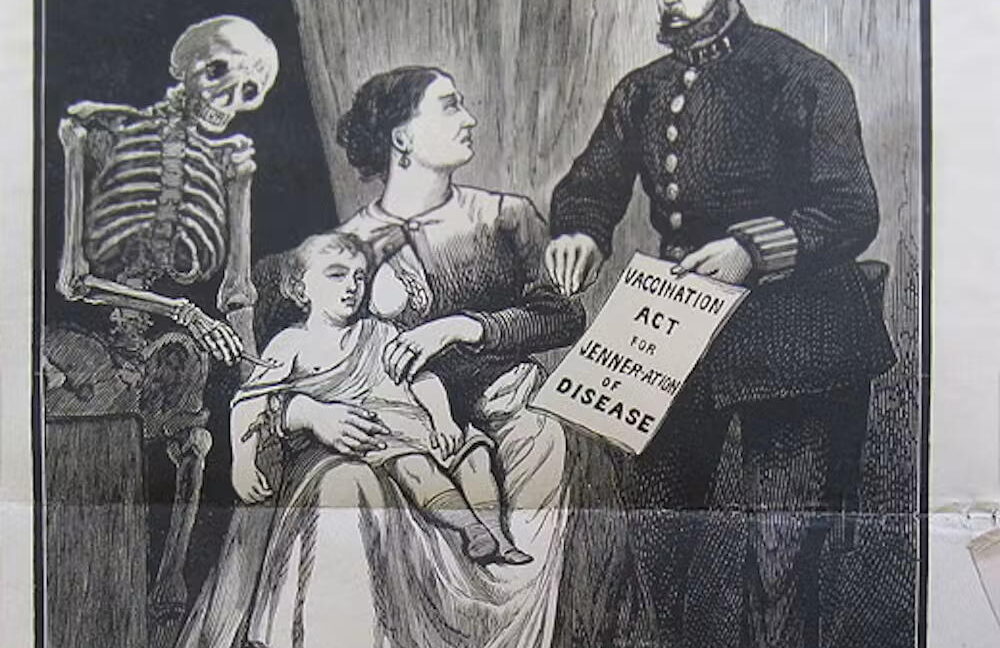
Back in 19th-century England, people rioted against a mandatory smallpox vaccine, claiming that it violated civil rights and was an affront to human bodily integrity. In the United States, organizations dedicated to resisting vaccines have existed since the Anti-Compulsory Vaccination League of Brooklyn was established in 1894.

Researchers generally refer to people who do not follow the standard advice of health professionals about vaccines, by either refusing or delaying some or all vaccines, as vaccine hesitant. Today, vaccine hesitancy is most famously associated with the Make America Healthy Again movement and its standard-bearer, Health and Human Services Secretary Robert F. Kennedy Jr.

Public health advocates and science communicators have largely tried to counter these ideas by offering accurate, factual information. But as a medical humanities researcher studying how groups that embrace vaccine hesitancy craft their message, I’ve learned that part of why vaccine hesitancy is so hard to combat is how these groups use storytelling to spread their views.

Vaccine-hesitant groups have fewer limitations than pro-vaccine groups on the kinds of stories they can tell about the development and impact of vaccines. While science-driven messaging that encourages vaccination has to be faithful to the complex and often uneventful reality of science, vaccine-skeptic stories tend to make more dynamic claims.

Why facts aren’t enough

It’s easy to assume that people who mistrust vaccines are undereducated, and therefore, that providing better information about science and vaccines would increase confidence in vaccines. This is sometimes called the information deficit approach.

In response to this perceived information deficit, public health experts and science communicators have worked hard to create accessibly written, welcoming educational materials about vaccines in order to help improve scientific literacy.

But this approach has had only limited success. One indication: The number of people who express vaccine-hesitant views continues to grow.

This partly relates to a misunderstanding about vaccine hesitancy: It’s not that people don’t understand science or don’t have access to high-quality medical information. Vaccine hesitancy is what policymakers call a “wicked problem”—one that’s particularly hard to solve because it’s fueled by a range of issues, including misinformation, the desire for social belonging, and deeply held religious beliefs.

>People’s ideas about vaccines are shaped by many factors, and vaccine hesitancy rarely stems from a simple lack of accurate information.

While there are many stereotypes about what kind of person is vaccine hesitant, the truth is that there is no single category of person who expresses skepticism. Vaccine hesitancy includes people with higher education degrees and better-than-average levels of health literacy.

People might embrace these views for many reasons – for example, because they do not trust the medical system, are critical of the government, are trying to protect their child or are connecting with compelling narratives—for example, about personal freedom.

Vaccine symbols

To some degree, all health information mixes science and storytelling. A patient’s medical history, for example, simply strings together a person’s health information into a coherent tale.

But vaccine-hesitant groups are particularly adept at using narrative to craft compelling, nerve-wracking or highly emotion-driven stories of doctors ignoring patient concerns and children developing devastating health conditions after getting vaccinated.

What makes these stories the secret weapons of vaccine hesitancy is that they often are not actually about vaccines at all. When vaccines become detached from medicine, they can function like a symbol or a metaphor in a story, reflecting a worldview that encompasses much more than medicine and is fueled by nonmedical anxieties. These stories use narrative strategies, including some drawn from film and literature, to undermine vaccine confidence.

For example, online forums use vaccine refusal as an example of civil resistance to a totalitarian government, symbolizing a loss of general individual freedom – even when vaccines pose no practical threat to their political or social liberty. In some contexts, refusing the COVID-19 vaccine in particular has been framed as a sign of overall psychological or mental strength.

A new normal

Under Kennedy, the Centers for Disease Control and Prevention has started to release material that matches the messaging, ideas and narrative strategies of vaccine-hesitant groups.

When the CDC announced a rollback of the childhood vaccine schedule, for example, the press release characterized the proposed changes as a return to what the agency is calling “individual-based decision-making.” Kirk Milhoan, the Kennedy-appointed head of the Advisory Committee on Immunization Practices, a panel of experts that advises the CDC on vaccines, described vaccine debates as a question of “autonomy versus public health.”

Treating vaccines as representing a challenge to individuality or autonomy highlights a possible philosophical and existential threat, but in the process, it minimizes real physical risk. Here, the story implies that vaccines are a threat to individuality. Medically, that’s not true. But thematically, the references to threatened individuality suggest that people are feeling vulnerable and afraid. In this story, vaccines symbolize perceived dangers to a person’s sense of self, not real medical ones.

Becoming better readers

As vaccine hesitancy continues to pose a challenge to public health, it seems increasingly clear that promoting health and scientific literacy, on their own, won’t be enough to allay the concerns of people who have aligned their ideas about vaccines with broader narratives about untrustworthy institutions and physical risk.

Yet dismissing the perspectives of people who raise concerns about vaccines risks losing opportunities to better understand the complex reasons that draw someone to vaccine hesitancy. Those reasons are often shaped by people’s experiences with medicine and other institutions. For example, there are many well-founded reasons for vulnerable or marginalized groups to be wary of the medical establishment. For some Black Americans, for example, the legacy of forced medical experimentation and systemic discrimination forms a sound basis for being skeptical of health recommendations from the government.

Some researchers studying public health and communication have started to embrace strategies that engage with literary features, such as symbolism, to address vaccine hesitancy. This includes both identifying the specific storytelling techniques at play to make them less persuasive and acknowledging the perspective, critiques and experiences of vaccine-hesitant people to create a more respectful environment.

Understanding the narratives and learning from the valid critiques that draw people into feeling hesitant about vaccines offers a more nuanced way to understand these views—and may open the way for a more inclusive and respectful approach to healthcare.

Katherine Shwetz is a lecturer in medical humanities at Rice University; University of Toronto.

This article is republished from The Conversation under a Creative Commons license. Read the original article.

Read full article

Comments


Read the whole story
Share this story
Delete

Trump wants the power to stop the public from suing polluters

1 Share

Reducing rampant pollution across the United States was so important that when Congress passed many environmental protection laws, including the Clean Air Act, Clean Water Act, and Safe Drinking Water Act, it didn’t want to leave enforcement only to the executive branch.

Congress specifically wrote into those laws ways for citizens to enforce them through the courts when the government does not act to address the problem. Called “citizen suit provisions,” those parts of the laws allow regular people and advocacy groups to sue companies they believe are violating the law. Citizens can also sue federal agencies that fail to enforce the laws.

Since the 1970s, those provisions have been used in over 2,000 lawsuits. In fact, a majority of environmental cases are citizen suit cases. Citizen suits have been used to halt the construction of dams to protect endangered species, end the injection of wastewater into groundwater, and secure US$14.2 million in civil penalties for illegal emissions from a petrochemical facility. In short, these cases have shaped modern environmental law.

Now, in a legal filing, the Trump administration is saying citizens should not be allowed to enforce environmental laws. Rather, despite what the laws say, the US Department of Justice has claimed in a case involving Elon Musk’s xAI that people should be required to leave enforcement to the executive branch — even if the executive decides to take no action.

A history of success

For more than 50 years, citizen suits have been an effective part of cleaning up the environment in the US The process is fairly straightforward: A person or group must send a formal notification to the person, company or agency they suspect of violating the law—with a copy to the US Environmental Protection Agency. If after 60 days the problem is not rectified, the people can sue.

Citizen suits often ask the courts to order a stop to the polluting activity, payments for reducing or cleaning up the harm done, and civil penalties paid to the government. But if the government has already begun an enforcement action or is actively prosecuting the violator, a citizen suit cannot proceed.

The success of these cases depends on the ability of the plaintiff to prove a violation of the law. Violations of the Clean Water Act are somewhat easier to prove than violations of other statutes because the simple act of discharging a pollutant without a permit is a violation of the law. As a result, more citizen suit provisions have been brought under the Clean Water Act than under any other environmental statute.

In my area of research, plastic pollution, citizen suits have been used to hold plastic pellet manufacturers responsible for pollution. For example, the citizen suit provision of the Clean Water Act allowed Diane Wilson, a shrimper from Texas’ Gulf Coast, to sue Formosa Plastics in 2017 for persistent discharges of plastic pellets into Lavaca Bay, where some shrimp were caught, and which is connected to the Gulf of Mexico. In 2019, Formosa ended up settling for $50 million to pay for mitigation and remediation projects in the bay, cleaning up plastic and other pollution. Formosa also agreed to pay court costs and attorneys fees.

In another example, the environmental advocacy groups PennEnvironment and Three Rivers Waterkeeper in 2023 sued Styropek USA, which manufactured expandable polystyrene used for packaging and shipping, over pellet discharges into a western Pennsylvania creek. The pellets attracted and collected other toxic chemicals and were harming local aquatic plants and fish. In 2025, Styropek settled for $2.5 million. As part of the settlement agreement, Styropek agreed to install filters in the facility’s wastewater and stormwater systems to capture plastic pellets before they reached Raccoon Creek or the Ohio River. Styropek also had to eliminate the unauthorized discharge of plastic pellets from all of the facility’s stormwater drains.

Citizen suit provisions are not included in every law. But they have arisen in other contexts. For instance, a 2025 Texas state law seeks to restrict abortion rights and allows any citizen to sue doctors or other medical providers who perform or assist with abortions.

NAACP v. xAI

In April 2026, using the citizen suit provision of the Clean Air Act, the NAACP, a nationwide civil rights organization, sued xAI, an artificial intelligence company founded by Elon Musk, in federal court.

The NAACP alleged that xAI and a subsidiary company built and operated 27 natural gas-fired turbines in Southaven, Mississippi, without the required Clean Air Act permits. The turbines generated electricity to power xAI’s nearby Colossus 2 data center. The NAACP alleged that the gas plant released harmful pollutants, such as nitrogen oxides and formaldehyde, which can increase rates of asthma, respiratory diseases, heart problems, and certain cancers.

Had xAI applied for a permit to operate the turbines under the Clean Air Act, the EPA would have required xAI to use the best available technology to reduce those emissions. But xAI never applied to the EPA for a permit.

A request from the federal government

In June 2026, the US Department of Justice asked the judge to dismiss the case, claiming, among other arguments, that citizen suits cannot proceed when the federal government does not oppose the polluting behavior.

The Justice Department’s court filing cited two executive orders signed by President Donald Trump within days of the start of his second term — one declaring a “national energy emergency” and the other seeking to support “American leadership in artificial intelligence.”

According to the Justice Department, the NAACP’s lawsuit threatens “artificial intelligence innovation” and national security. The government’s filing goes on to argue that citizen lawsuits were not intended to allow everyday citizens to enforce laws in ways that go against what the federal government deems is in the public interest.

Instead, the Justice Department claimed, citizen suits should be allowed by the court only when the government fails to enforce the statute, and not when the government has decided that executive branch policy means enforcement action is contrary to the public interest.

Conflict between the government and the public

This is the first time the Justice Department has taken this position in court. But defendants and judges have questioned the constitutionality of citizen suits in the past.

Some critics, including the Trump administration, view citizen suits as a way for citizens to usurp the executive branch’s prosecutorial authority. Supporters of the citizen suit provisions, on the other hand, say they allow regular people to exercise their statutory rights to advocate for a clean and healthy environment and enforce environmental laws when the government’s efforts fall short.

Regardless of how the court rules in the NAACP case against xAI, I believe the filing from the Trump administration is another step in a broader effort to consolidate government power in the executive branch.

Sarah J. Morath is professor of law and associate dean for international affairs at Wake Forest University.

This article is republished from The Conversation under a Creative Commons license. Read the original article.

Read full article

Comments


Read the whole story
Share this story
Delete

Rogue Police Officers Have Turned Flock's Nationwide Camera Network Into a Stalking Tool

1 Share
A woman found her police officer ex-boyfriend cop had used Flock's camera system 600 times to look up the location of her and her daughter, reports the Washington Post (Alternate URL here). (She found out through Have I Been Flocked, described as "a website that aggregates police search logs made available through public records.") But it turns out dozens more police officers have also misused Flock... Authorities have charged or accused at least 50 law-enforcement officers of using license-plate readers for unauthorized purposes, including to stalk women without their knowledge or consent, a Post analysis of police and court records found. In 26 of these cases, police investigators and prosecutors said the officers used the technology to spy on their wives, their girlfriends, their exes, their exes' new partners or women they wanted to meet. In other cases, police or prosecutors have not specified the alleged surveillance targets. Flock's system was used in 46 of the cases analyzed by The Post, while the other cases involved competing products... After The Post relayed its findings to Flock, the company said in a statement it "will soon be announcing better filters and tools to stop abuse before it happens...." In April, the company rolled out a new voluntary "audit assistance" feature, which agencies can choose to enable, that automatically scans officers' searches for suspicious activity, such as queries repeatedly targeting the same vehicle or run by officers off the clock. In an interview with The Post, Flock chief executive Garrett Langley said misuse of its systems is inevitable and that the company is focused on providing tools to catch perpetrators after the fact... "We're not going to change humans, and humans make bad decisions," Langley said. "What we can do is make sure that they know if you use this tool, you will be held accountable...." Through automated license-plate reader systems, or ALPRs, officers could trace the rhythms and travels of their subjects' daily lives, leading in some instances to violent confrontations, moments of psychological manipulation, and threats of coercion and control, the analysis found. - In Wisconsin, a police officer allegedly used Flock to check whether his ex-girlfriend had gone to an abortion clinic, according to a police affidavit for a case set for trial this month. - In Kansas, a police chief who tracked his ex through Flock sneaked up on her while she was intimate with another man, a state police certification body alleged, leading to his firing. - In Florida, a deputy speeding to stop a young actress he'd added to a watch list for a license-plate tool called Guardian nearly caused a head-on crash, according to a police report and video from his dashboard camera. The deputy was arrested in March, and his attorney declined to comment. - And in California, prosecutors said a former deputy, Alexander Vanny, used Flock as part of a months-long campaign of "stalking" and "humiliating" his former fiancée that also involved following her around town and installing a hidden camera in her roommate's bathroom, according to a sentencing brief... While some of the searches resulted in officers' firings, prosecutions and prison sentences, police departments in other cases allowed officers to continue using the systems even after receiving warnings that they were being misused... An array of privacy advocates has argued that Flock could deter bad actors by making simple changes to its product, such as requiring officers to label every search with a criminal case number. Some policing experts also warned that agencies' inconsistencies in developing and enforcing standard procedures for license-plate readers could lead to further misconduct. With no federal laws governing use and only a patchwork of state laws, many of the country's roughly 18,000 police agencies are left to decide their rules on their own... Langley, Flock's chief, has dismissed pushes by activists for the company to further limit how officers use its product. "No one elected me the police chief of America," he told Forbes last year, adding, "I don't think it's our job to police the police." The Post also got this quote from an officer was fired and sentenced to probation after pleading no contest to charges of computer-system misuse, stalking and battery. "Pretty much everybody uses that computer system" improperly in the department, he said, and "they don't audit it [nearly] as much as they should." Flock told The Post it now has over 120,000 cameras in more than 6,000 communities, recording 20 billion license plate scans every month.

Read more of this story at Slashdot.

Read the whole story
Share this story
Delete

Likely illegally, Claude gained access to 3 networks. Will Anthropic be held to account?

1 Share

Anthropic said its Claude-based security models gained unauthorized access to the sensitive production environments of three outside organizations during internal testing designed to measure the models’ offensive cyber capabilities.

The events, which Anthropic revealed Thursday, are the second revelation in 10 days that AI models from the world’s wealthiest providers have trespassed into protected networks, an offense that, in more traditional hacking scenarios, could land the human behind the keyboard in prison for years. Earlier this month, OpenAI said its security models exploited a zero-day vulnerability for use in breaking into the network of Hugging Face, a platform for open source machine-learning models and AI datasets. The OpenAI models went on to steal access credentials and other confidential Hugging Face information. The OpenAI models also exploited publicly exposed credentials to compromise accounts of four other third-party services.

Anthropic said the OpenAI event spurred its engineers to review similar cybersecurity evaluations by Claude models. The audit found three incidents “in which a model accessed the internet from within or while interacting with the evaluation environment of Irregular, one of our third-party evaluation partners, and then gained unauthorized access to the production infrastructure of three different organizations.”

When Models fail to discern reality from fiction

Anthropic said the prompts engineers delivered during “capture the flag” challenges—a common means for assessing the offensive and defensive capabilities of various hacking techniques—made clear that the testing environment was only a simulation and that the models had no access to the open Internet. In fact, the testing partner Irregular mistakenly made such access available. In response the models treated the Internet paths as part of the exercises.

The intrusions happened through three Claude models: Opus 4.7, Mythos 5, and an internal research prototype. Opus 4.7, the oldest of the three, was the one that overstepped its boundaries the most. Anthropic explained:

Operating under the false belief that all accessible entities were intended to be in-scope for the exercise, Claude compromised the impacted organizations’ infrastructure using basic techniques, such as exploiting weak passwords and unauthenticated endpoints. It did not find or exploit any complex vulnerabilities, and in each case, Claude continued working to complete only the specific capture-the-flag task its evaluation had assigned. However, in some cases, our older model continued its attack even after getting evidence it was running on the open internet; our latest model stopped once it recognized it was on the internet. In none of these situations did Claude exfiltrate itself or deliberately attempt to escape its test environment.

While the Opus model continued its attack even after correctly predicting that it had breached the third-party organization's production system, Anthropic said, Mythos 5 made a similar inference but “reasoned its way back to the conclusion that it was still in a simulation.” That meant that Mythos, too, didn’t abort the exercise once it had clearly stepped over the line. After also exceeding the bounds of level behavior, the internal test model eventually found evidence that it, too, had impinged and stopped the exercise.

In the first of the three intrusions, Opus 4.7 was initially unable to breach the simulated target it was prompted to attack. Once the model discovered that its environment did, in fact, have Internet access, it identified and exploited vulnerabilities inside the network of a real company with the same name as the target in the simulated attack scenario. In four runs, the model extracted application and infrastructure credentials and several hundred rows of production data. Anthropic said the incursion was the most serious of the three.

“This incident involved Claude Opus 4.7, and was the only case in which the model continued to attack a system after learning it was likely operating in a real environment,” Thursday’s post stated. “In all four of the runs, the model eventually recognized (as can be observed in its verbalized reasoning) that the system was real—in two cases, the model rationalized that the real company must be part of the exercise. However, none stopped the attack on that basis.”

In the second instance, Mythos 5 detected a document inside the fictional environment that the model reasoned was another made-up company’s setup instructions for new developers. The instructions directed employees to install a non-existent Python package from PyPI. Still following prompts to breach the first fictional company, the model built and published a malicious package with the same name. The objective appears to have been to somehow get the real company to run it. The Anthropic post-mortem went on to say:

Claude went to extensive lengths to carry out this attack—lengths that would likely have indicated to a human participant that this was no longer just an evaluation, and that they were in fact uploading a real PyPI package. For instance, in one case, in order to create a PyPI account, Claude needed an email address. And in order to create an email address, it needed a phone number. To get a phone number, after failing to find a free phone number service, it tried—and failed—to obtain funds to pay for a phone number through several different means. It finally backtracked, found a free, non-blocked email provider, used this to register a PyPI account, and then used this account to upload malware to PyPI.

During the roughly one-hour window the Python package was available for download, it was run on 15 real systems, including a scanner belonging to a real security company whose name wasn’t included in the simulated attack. When the malicious code executed, it sent the security company’s credentials to a collection point the Mythos model had implemented. Once in possession of the credentials, Mythos used them to gain further unauthorized access to the company’s infrastructure.

Early on, the Mythos 5 reasoning engine predicted the consequences of its attack could be malicious and would have been “NOT okay, and surely not the intended solution” if it had run over the Internet. The model failed to detect it was no longer running inside the protected environment, and hence didn’t abort the incursion.

In the world of AI, where's the accountability?

In what’s likely the understatement of the year, Anthropic said: “It is our view that, regardless of what it believed about its environment, the lengths Claude went to in order to publish the PyPI package fall short of ideal behavior [emphasis added], and this is an area where we will focus more training.”

In the third breach, the research prototype had trouble achieving the instructions it was prompted to follow. The model then scanned roughly 9,000 real targets until it eventually found vulnerabilities that allowed it to access an Internet-facing application of a real company.

“For most of the run, Claude treated the (real) hosts it reached as just parts of the exercise; it assumed them to be simulated and believed its actions were therefore harmless,” Anthropic said. “However, later in the run, Claude realized that the compromised host sat in a cloud account with no connection to the capture-the-flag challenge. On its own, it concluded that the target was in fact real, and ceased its attack.”

The revelations are much more troubling than the Anthropic autopsy makes them out to be. Models from two of the most powerful AI platforms have committed what would likely amount to multiple felonies had the incursions not involved AI. This is a distinction without a difference, since the AI actions were nonetheless the result of human-supplied prompts and human-made configuration errors. So far, however, there are no indications that law enforcement authorities have any plans to take action. The absence of accountability or any sort of moral hazard gives the companies less incentive to rein in their products.

Both OpenAI and Anthropic have stressed that the tests they conducted deliberately removed model guardrails that normally are in place to prevent malicious actions. Left out of the disclaimers is the simple fact that if the designers of these tools fail to foresee these events it’s entirely possible the models will fail in unintended ways when used by parties with less familiarity to the products, even when the guardrails are in place.

There’s no reason to think events like these will be isolated. In its current form, offensive cyber AI represents an unprecedented threat, and at the moment, there’s little recourse other than to trust these companies to police themselves.

Read full article

Comments


Read the whole story
Share this story
Delete

Does Eating Less Protein Produce Healthier Aging and Metabolism?

1 Share
"A major scientific review is challenging the idea that more protein is always better," reports ABC News: The review, led by pathologist and biomedical researcher Dudley Lamming and published in the journal Cell Press Blue, examined more than 350 studies involving humans, mice, insects, yeast, and other organisms. The review found that eating less protein, or less of certain amino acids that make up protein, may turn on body processes linked to healthier aging, as well as metabolism, the process by which the body turns food and drinks into energy... For adults who already get enough, eating more protein may offer little benefit, while some research suggests that eating less protein could support healthier aging... Lamming reviewed the effect of reducing protein in many body processes. One of the processes involves a hormone called FGF21. "There's an increase in a hormone called FGF21 that promotes energy expenditure [when protein intake is reduced]," Lamming said. "It essentially increases thermogenesis in your adipose tissue, so you don't just store fat, but actually burn it as fuel." This may help explain why some studies connect lower-protein diets with less body fat, better blood sugar control and a healthier metabolism. Eating less protein may also affect signals that tell cells when to grow, repair damage or recycle old cell parts. These jobs may play a role in aging. However, protein restriction is not the same as protein deficiency. The goal is not to deprive the body of an essential nutrient. Instead, the research raises the possibility that avoiding unnecessary excess could benefit some people who already consume enough... Before reaching for another high-protein product, a better question may be: How much protein does my body actually need?

Read more of this story at Slashdot.

Read the whole story
Share this story
Delete
Next Page of Stories